
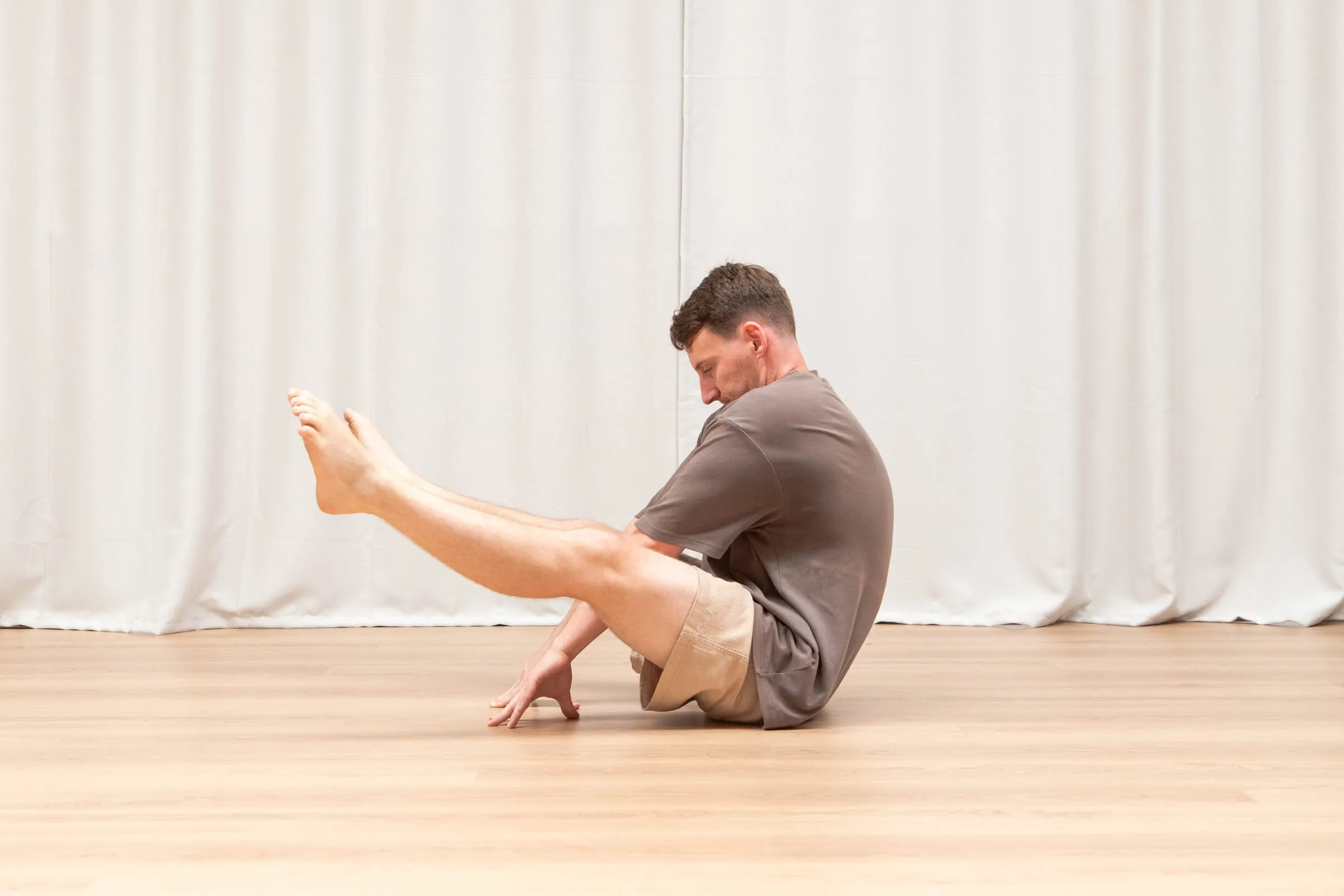
Free self-check · 10 to 15 minutes
The Movement Lab Screen
Can you still get into the positions a healthy body should?
This is a simple self-check of whether your body can still access the positions it’s built for. Ten positions, on the floor, no equipment, about ten to fifteen minutes. You give yourself a pass or a fail on each, and you get a score you can re-test later to see what’s changing.
One thing to be clear about upfront: this isn’t a test that predicts injury, and it isn’t a diagnosis. It’s a mirror. It shows you which positions you can still get into and which ones have quietly gone missing, so you know what’s worth working on.
How to use it
- Go through the ten positions and give yourself a pass or fail on each. Be honest. A near-miss is a fail, and that’s useful information, not a bad mark.
- Your Pass score is out of 10. One point for each position you pass. Any position you can’t pass is what I call a position of concern, a spot worth some attention.
- Re-test every month or two. The single most useful thing here is watching a position come back over time. That’s the point.
- Stay comfortable. Effort and mild stretch are fine. Sharp pain is a stop sign. If something hurts, skip it.
Before you start, one safety note
Nothing here should cause sharp pain. Effort, yes. Mild stretch, yes. Pain, no. If a position hurts, skip it. That’s a position worth having someone look at rather than push through on your own. The one movement that needs a specific caution is spinal extension, position 10, and I’ve put the stop-rule right there with it.
The 10 positions
The 10 positions are designed to check all the main joint movements of the body that are typically lost in modern-day living. For each one: what it checks, and how to give yourself a pass.
Deep squat
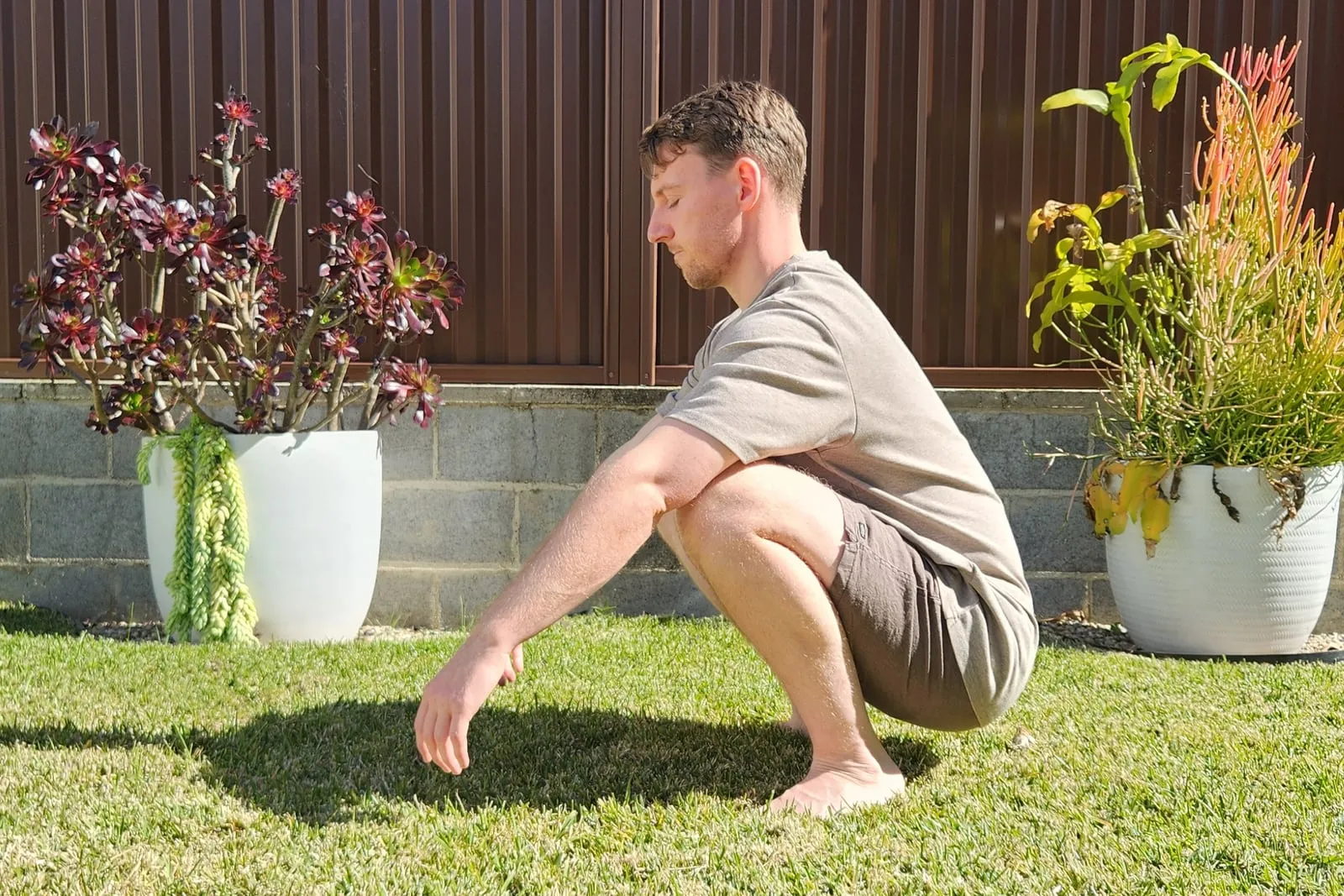
What it checks: can you rest at the bottom of a squat, the position humans are built to rest in.
Pass: hips below your knees, both heels flat on the floor, held for 10 seconds.
Don’t kid yourself: if your heels lift, it’s a fail. That’s usually stiff ankles, and it’s worth knowing.
Seiza (kneel and sit back)
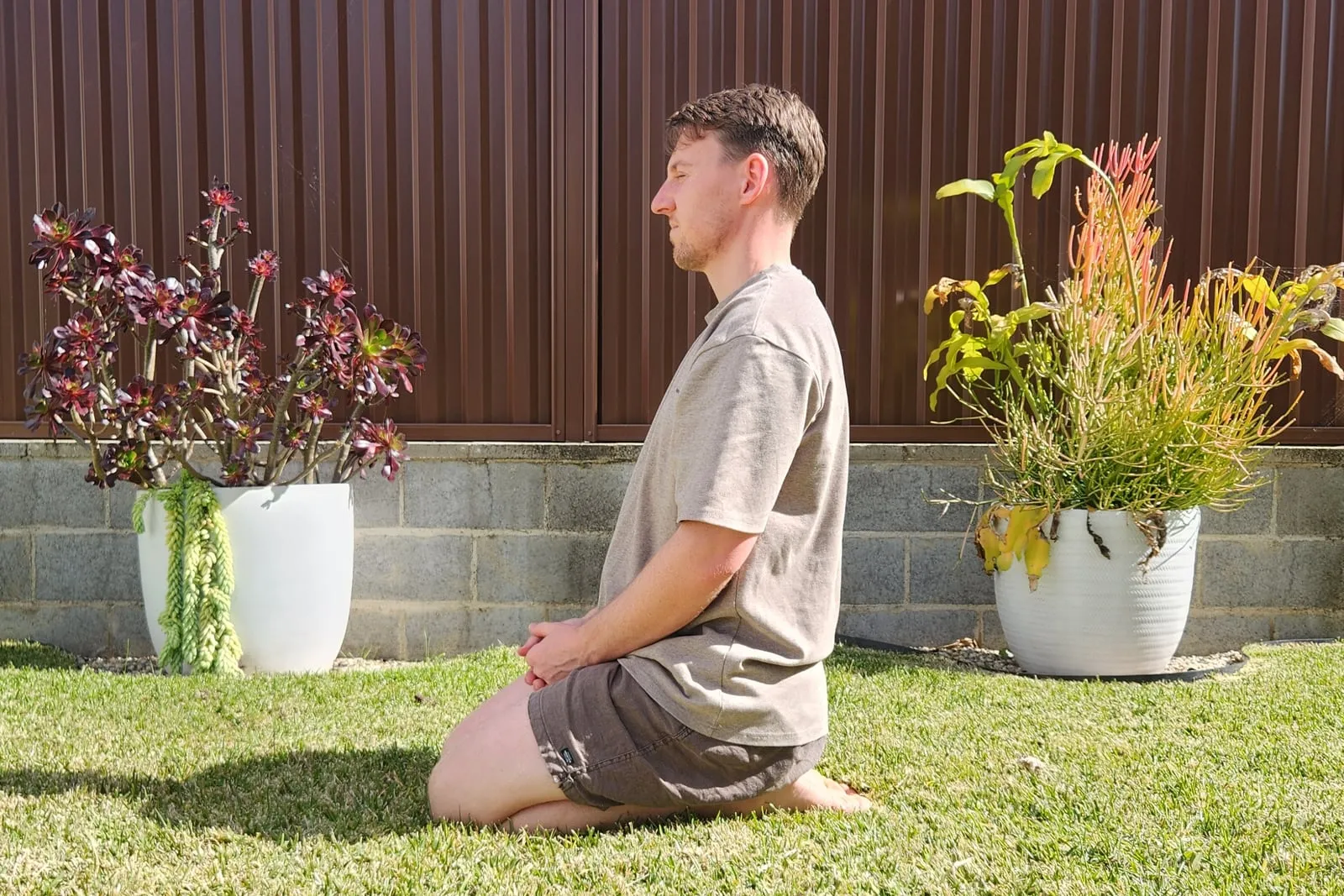
What it checks: can you kneel and sit back onto your heels, which asks a lot of the ankles, knees and feet.
Pass: sit back with your hips resting on your heels, tops of the feet down (untucked) or toes tucked under, either one counts, held about 60 seconds, no sharp pain.
Cross-legged sit and rise
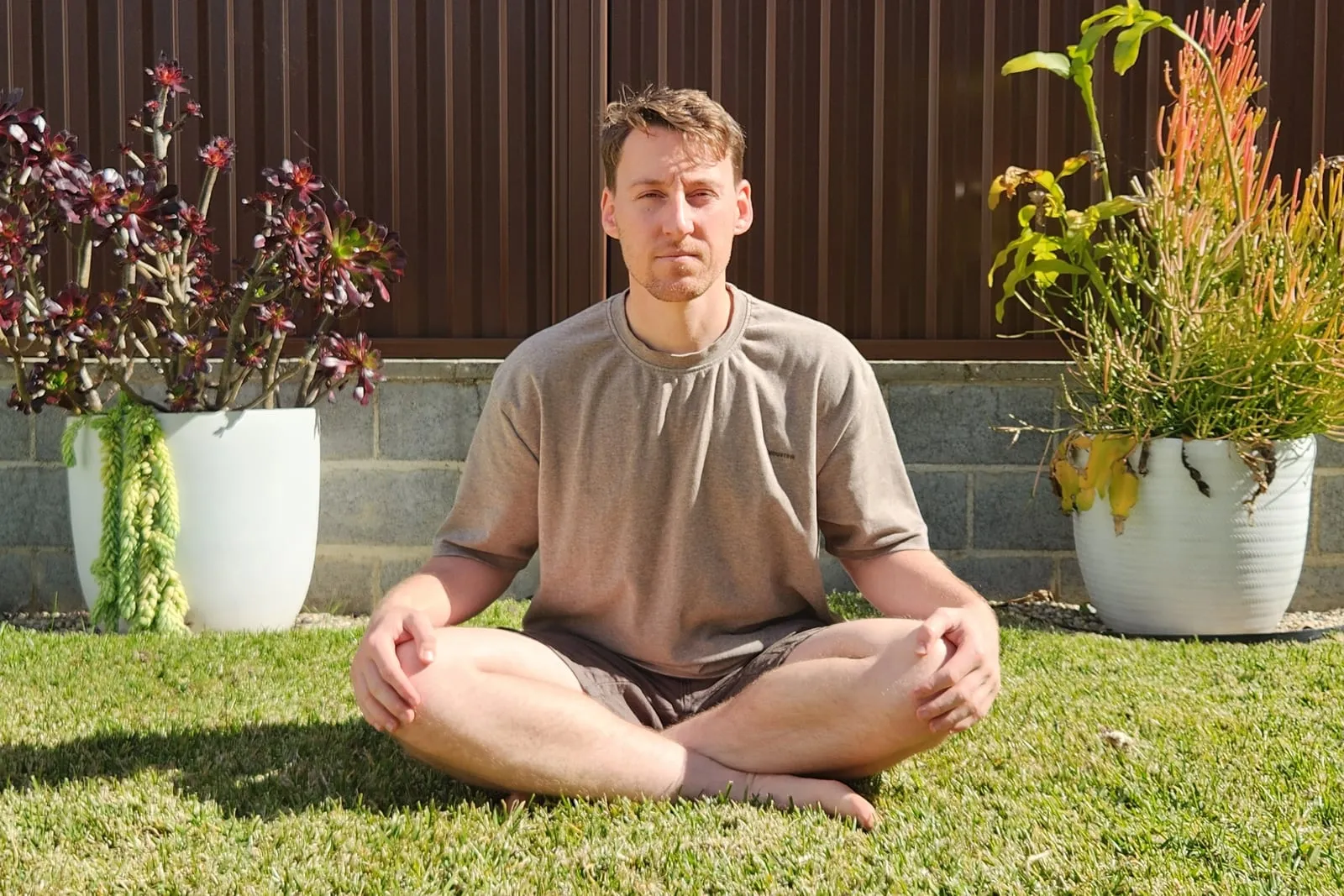
What it checks: can you sit cross-legged comfortably, and get up again with little help. It checks hip mobility, and it’s a good read on staying mobile and independent over the years.
Pass: sit cross-legged with your knees settling down rather than poking up high, and get up using no more than one hand.
Seated straddle (pancake)
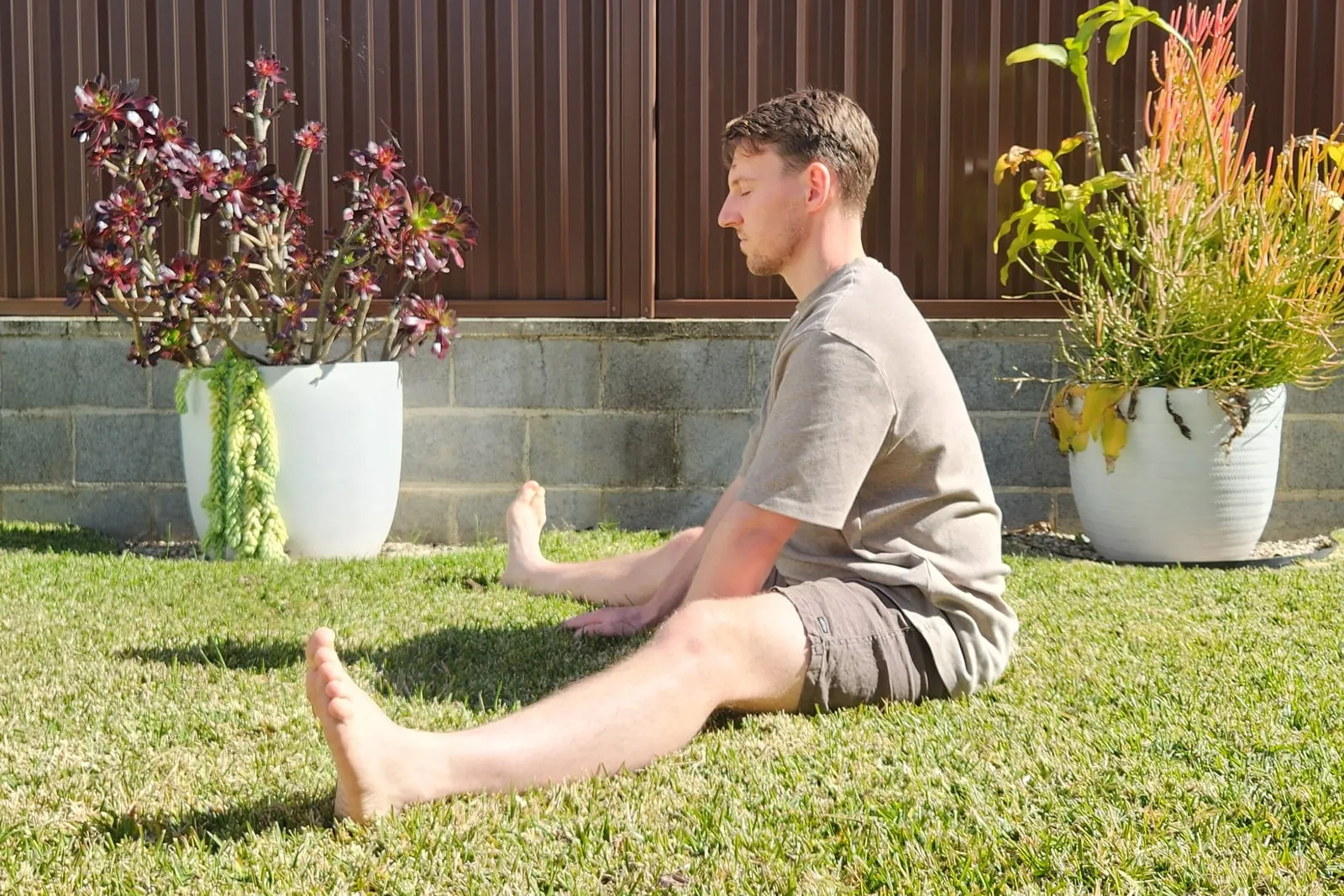
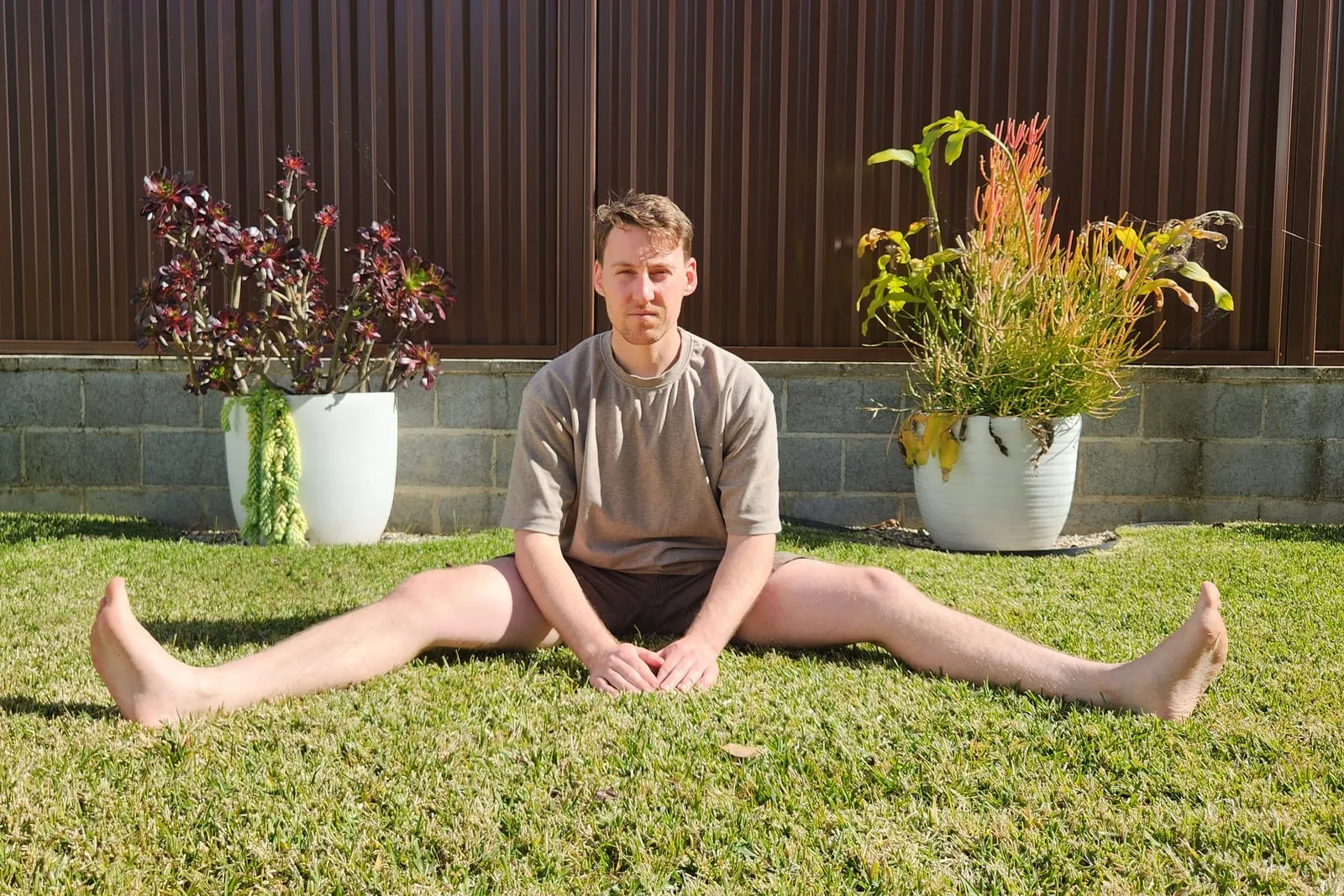
What it checks: can you sit in a wide straddle upright, hips open, without your pelvis rolling back underneath you. It checks groin mobility and pelvis control, which a lot of us lose when sitting a lot.
Pass: sit in a wide straddle, upright and tall, pelvis not falling backward, held 30 to 60 seconds.
Standing toe-touch
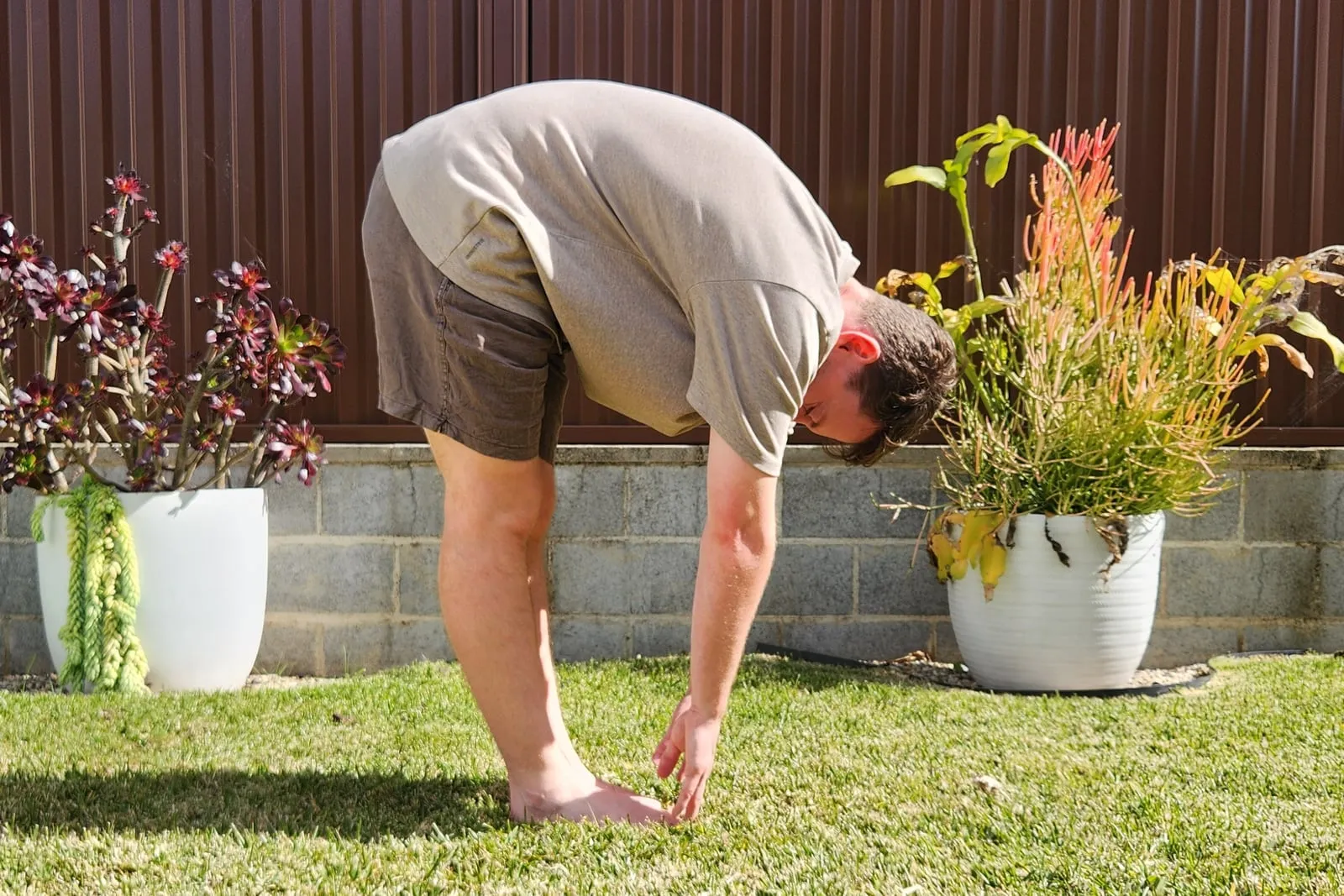
What it checks: the whole back line of your body, heels to head.
It especially tests the low back and hamstrings.
Pass: stand with straight legs and touch your fingertips to the floor.
Hip-flexor length
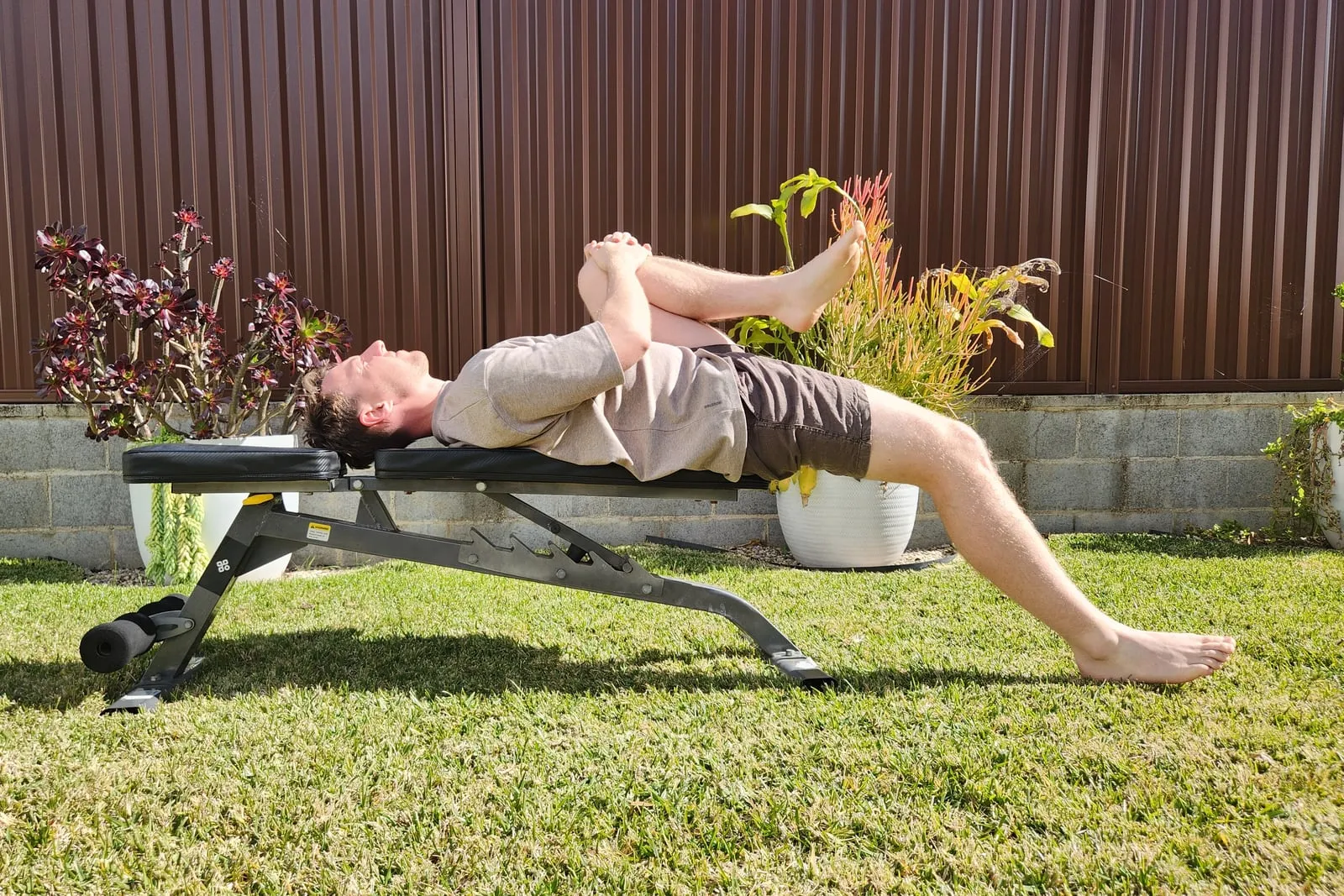
What it checks: whether the front of your hip can reach neutral. This is the classic thing sitting quietly shortens.
Pass: lie on your back at the edge of a bed, hug both knees to your chest, then keep one hugged and slowly lower the other leg. The lowered thigh should settle flat, resting level, with no arch in your low back and the thigh not drifting out to the side.
Thoracic rotation
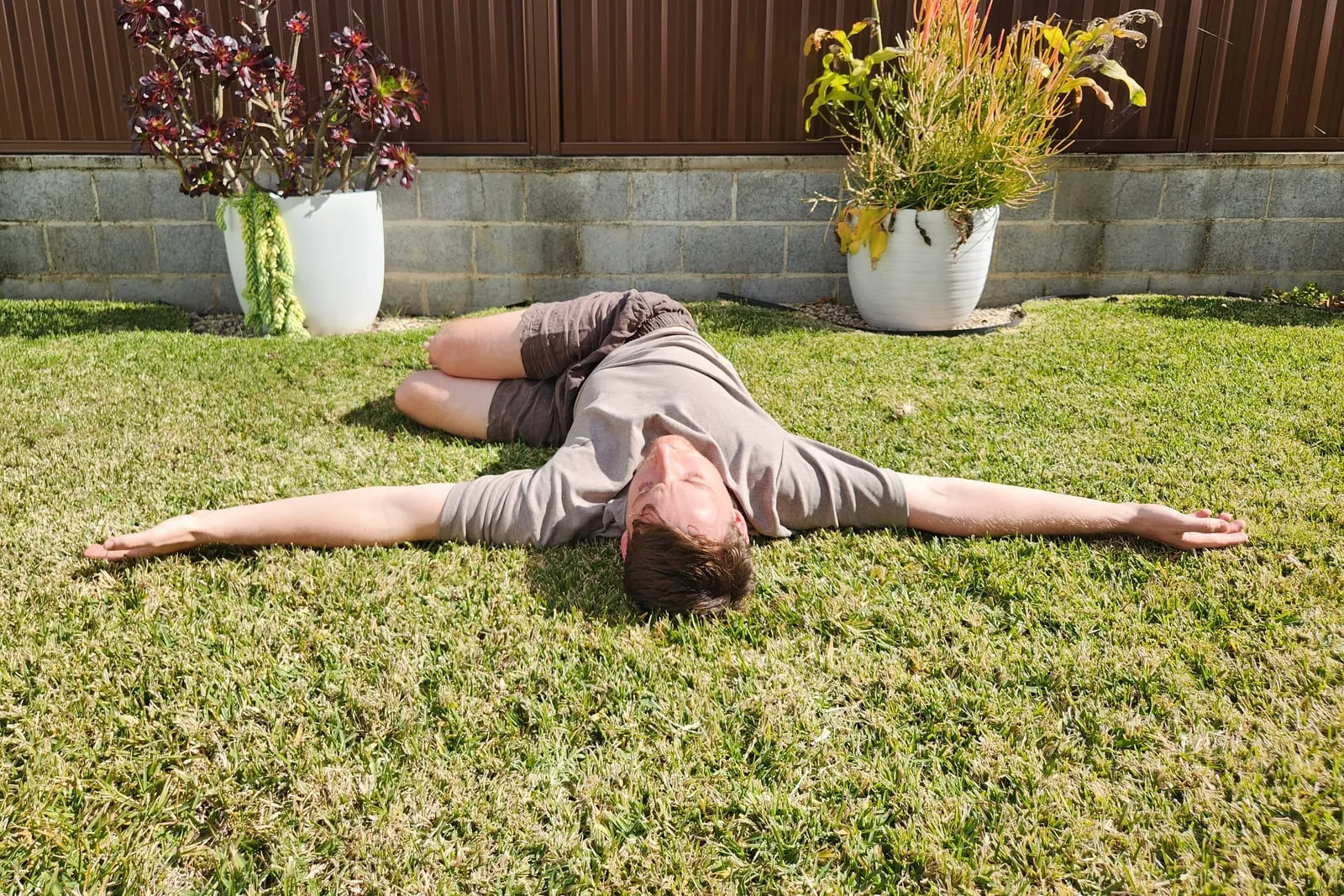
What it checks: can your mid-back rotate on its own, without just twisting from your low back and hips.
Pass: lie on your side, hips and knees stacked and bent to about 90 degrees, knees pinned together. Arms straight out in front, palms together. Keeping your knees pinned, sweep your top arm up and over to the other side and try to lay that shoulder to the floor.
Pass = both shoulder blades flat to the ground, without your knees peeling apart. If the knees lift, that’s your low back cheating, and it doesn’t count.
Overhead reach
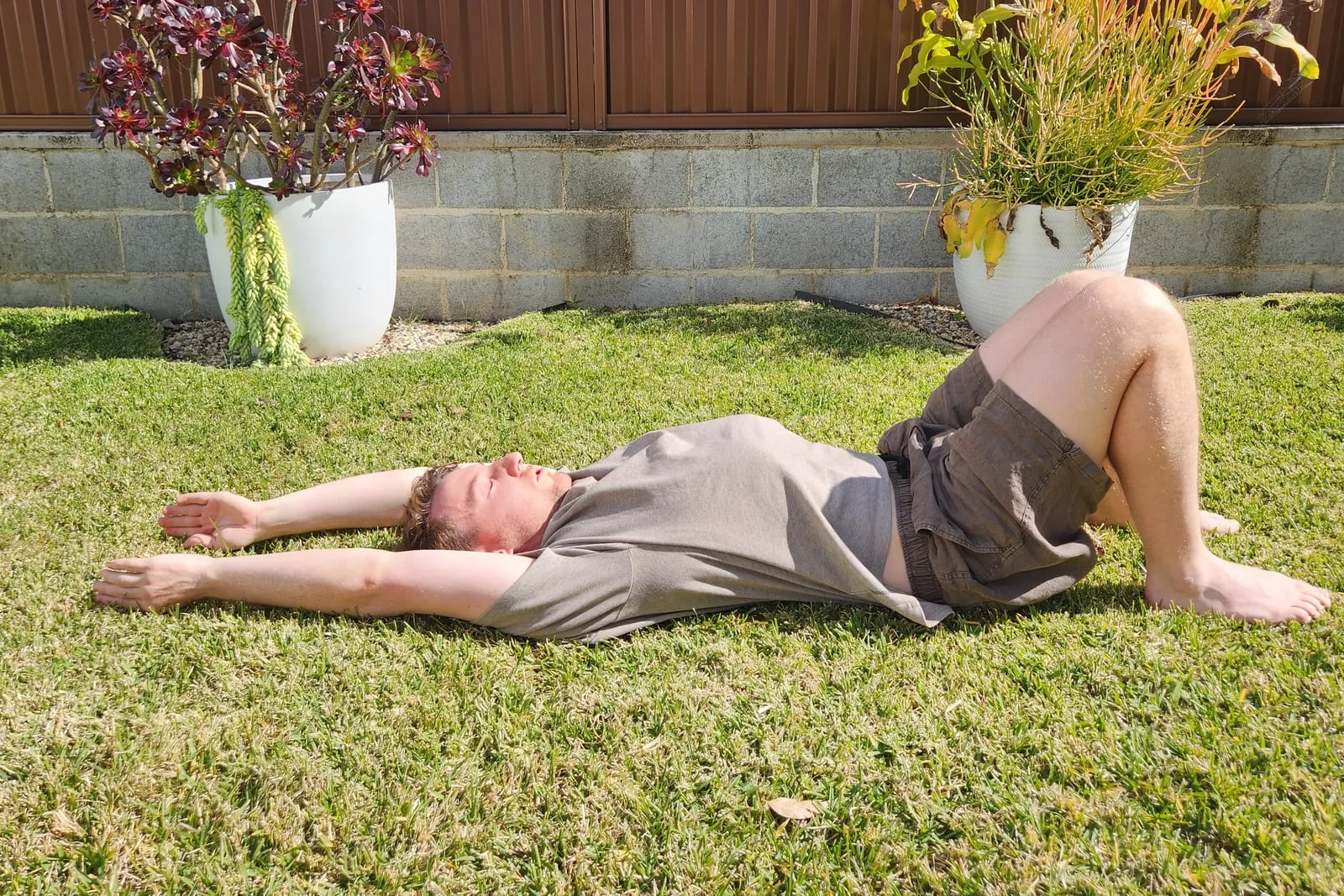
What it checks: can both arms reach fully overhead without your ribs and back arching to fake it. It checks your scapula movement and external rotation of the shoulder, and it’s important for preventing a rounded back or shoulders.
Pass: lie on your back with your knees bent (this stops you arching), and reach both arms overhead to the floor behind you with your ribs staying down and only minimal fudging.
Behind-back reach
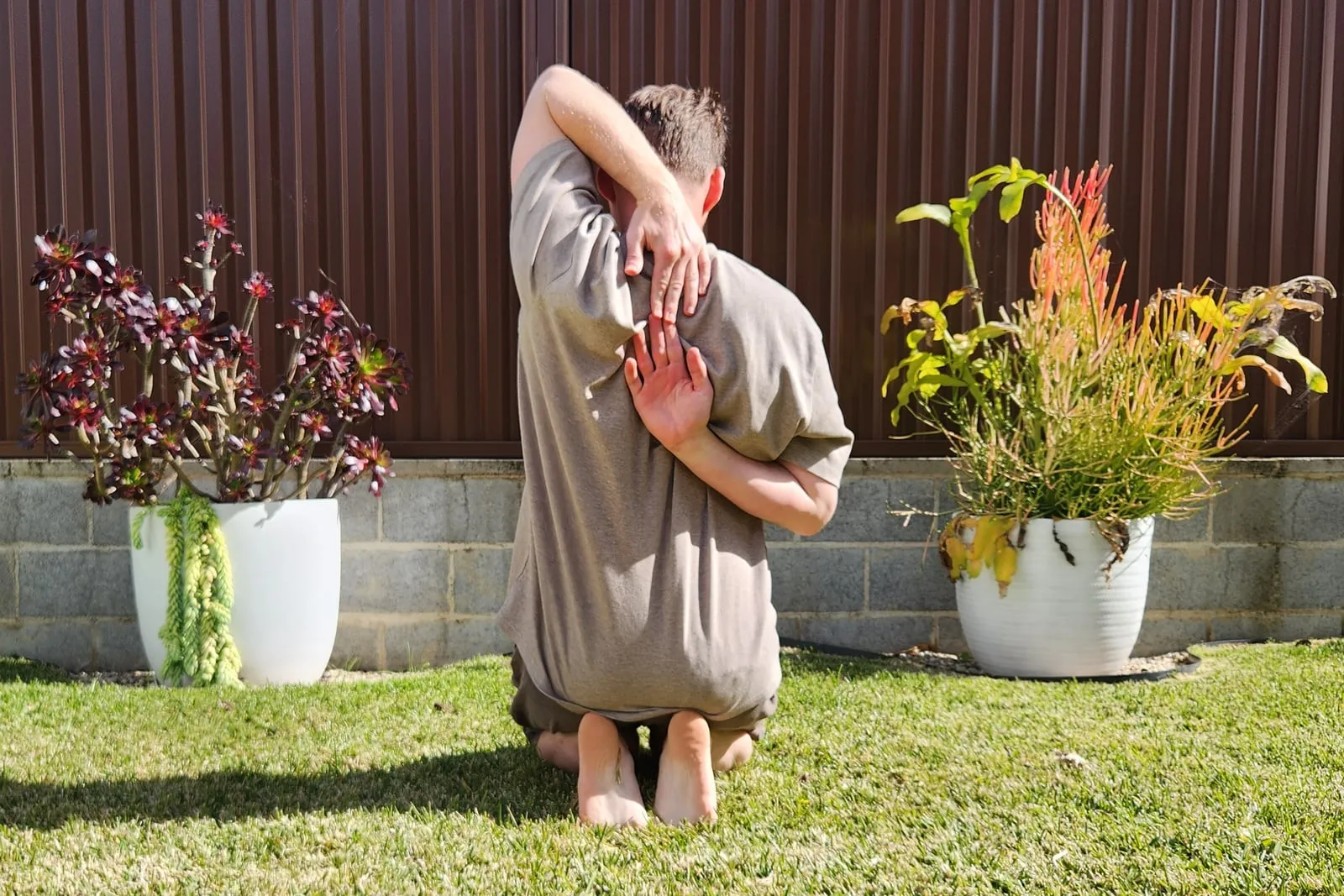
What it checks: can one hand reach over your shoulder and the other up your back to meet. One side is nearly always tighter. It checks scapula mobility and internal rotation of your shoulder joints.
Pass: reach one hand over your shoulder and the other up your back, and get your fingertips to touch, on both sides.
Spinal extension
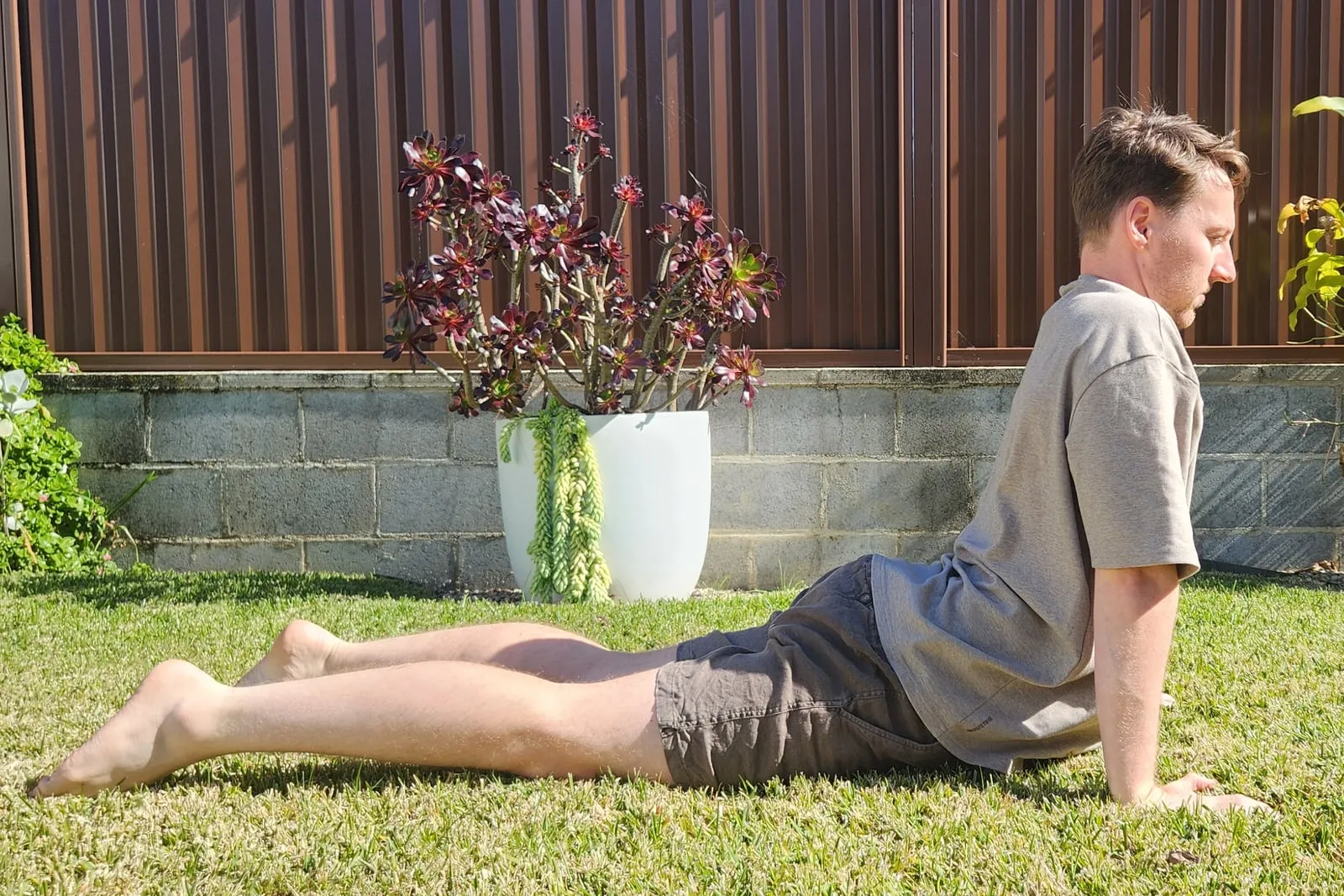
What it checks: can your spine extend and arch gently backward, the exact direction sitting deletes.
Pass (full cobra): lie face-down, hands under your shoulders, and press up with your arms straight and elbows locked until your shoulders stack over your hands, chest lifted, with your pelvis staying in contact with the floor. Hold 10 seconds, no sharp pain.
If that’s too much (the scaling step): sphinx, up on your forearms instead of your hands, pelvis down. That’s your starting point toward the cobra.
Don’t kid yourself: if your pelvis lifts off the floor, you’re pushing back into your hips and faking the shape. Pelvis down is what forces the movement into your spine.
Safety, read this before you try it
Stop if this causes sharp pain, or any numbness, tingling or pain travelling down your leg. That means extension isn’t the right direction for you. Skip this item and check with a practitioner.
What your score tells you, and what to do next
Your Pass score out of 10 is your starting line. Every position you couldn’t pass is a position of concern, and that’s exactly where the useful work is.
If you passed all 10, that’s a great sign: you’re in good shape. There’s an elite level of each position too, and if you’re interested, they’re fun to attempt.
Here’s the honest part. This check shows you which positions have gone missing. What it can’t do on its own is tell you why a particular one is stuck, because sometimes the tight spot isn’t the real problem. It can be compensating for something else further up or down the chain, and figuring out which is which is what an in-person assessment is for.
So the two next steps are simple:
- Work the positions you didn’t pass, and re-test in a month or two. Watching the number move is the whole reward.
- If a position won’t shift no matter how consistent you are, that’s the signal it’s worth a proper look. That’s what the Movement Plan Analysis is for: finding what’s actually driving it, and building the plan for your body.
No pressure, no packages. The goal is to help you move well enough that you need me less.
Get the starter guide
Pop your email in, click the confirm link I send you, and the guide opens straight away: a short, practical plan for the positions you couldn’t pass.
You will get an email asking you to confirm. That is Kit checking the address is really yours. Unsubscribe from any email in one click. We do not share your address, and our privacy policy says what we do with it.
Keegan · Keegans Movement Lab · Live Better, Longer.